

Satoshi Scoop Weekly, 2 Aug 2024
Take a byte out of the latest weekly updates in the Bitcoin ecosystem. All things #POW and #UTXO.
Crypto Insights
What is an Appropriate ZKP scheme for Bitcoin OP_ZKP Proposal?
This proposal seeks a Zero-Knowledge Proof (ZKP) scheme for the Bitcoin OP_ZKP proposal with several advanced requirements: minimal security assumptions, small block size consumption, mandatory batched verification, compact verification keys, and optional features for aggregated proving.
The Inner Product Argument (IPA) is the top candidate due to its transparent setup, ECDLP reliance, secp256k1 curve compatibility, smaller proof size, and support for batch verification and aggregated proving. Yet, IPA faces challenges, such as the linear size of the verification key relative to the circuit size and the overall integration complexity.
If IPA’s obstacles are insurmountable, an alternative ZKP scheme, Dory, is under considered. Dory offers logarithmic proof sizes, which can be simplified through Torus-based optimizations as described in this video and this paper. However, adopting Dory would require accepting the Symmetric external Diffie-Hellman assumption (SXDH), marking a significant security framework shift.
Bitcoin Testnet 4 is Ready to be Merged
The pull request: https://github.com/bitcoin/bips/pull/1601
Lightning Labs: Taproot Assets on Lightning Network as a Global Financial Interoperability Layer
Lightning Labs announced the launch of Taproot Assets on the Lightning Network, allowing the minting of assets on Bitcoin and sending them instantly for low fees via the Lightning Network. Developers can download the latest version of the Lightning Terminal (litd) suite and use it in integrated mode for development with Taproot Assets.
Taproot Assets v0.4.1-alpha and Lightning Terminal v0.13.991-experimental include hotfixes for issues related to the incorrect creation of proofs.
Starkware: Path to General Computation on Bitcoin
Starkware published a paper on STARK research on Bitcoin, The path to general computation on Bitcoin, claiming it to be the "most practical covenant-rollup research ever.”
The research explores how the combination of STARK and OP_CAT will unlock a wide range of use cases for Bitcoin and pave the way for its true large-scale adoption.
BitcoinOS: Successfully Verified ZKP on Bitcoin Mainnet
As a Bitcoin rollups protocol, BitcoinOS claims to have successfully verified ZKP on the Bitcoin mainnet.
This verification relies on the BOS's ZK Succinct Non-Interactive Argument of Knowledge (zk-SNARK) verification software library BitSNARK, enabling developers to create "near-trustless bridges" for moving Bitcoin.
BitVMX: Implementing Interactive Verification of SNARKs on Bitcoin
BitVMX demonstrated how to interactively verify SNARK proofs on Bitcoin using BitVMX.
Details can be found in the video: Interactive SNARK Verification on Bitcoin using BitVMX
Bitcoin Holder Portrait: From Perspectives of Politics, Demographics, & Sentiment
Based on a survey of 3,538 US adults, this report finds that owning Bitcoin:
Shows no strong correlation with race, ethnicity, religion, relationship status, income, education, or financial knowledge—except for age and gender—typically young males.
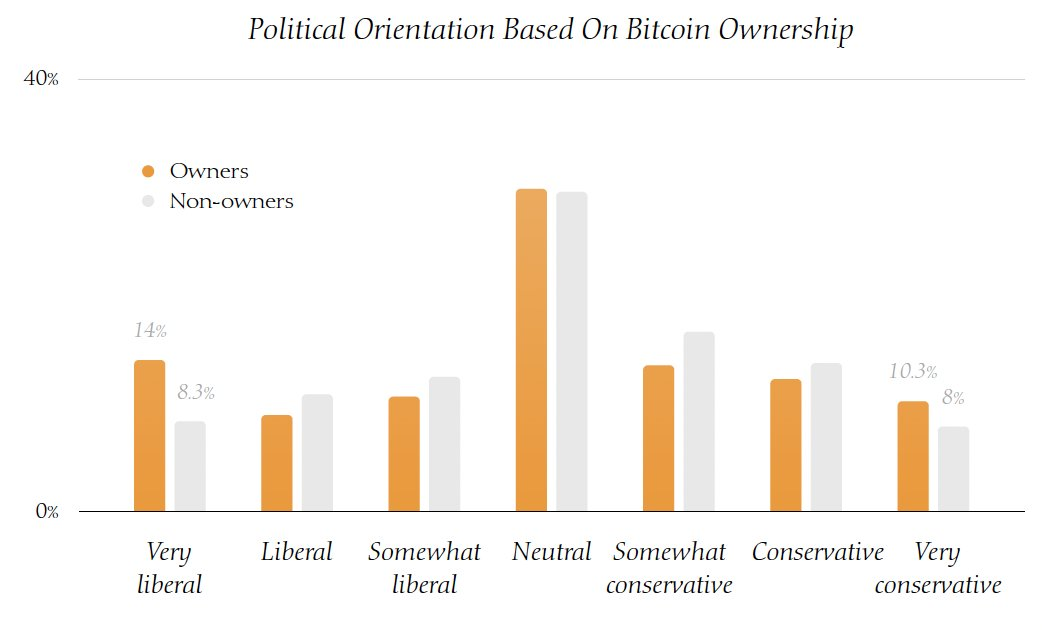
Covers the entire political spectrum and is mostly politically neutral—unlike many commentators, Bitcoin scholars, and politicians who see Bitcoin ownership as an identity reflecting political orientation—they believe Bitcoin holders lean towards the right and libertarianism.
Knowledge about Bitcoin, belief in the utility of Bitcoin, trust in the Bitcoin protocol and asset, and the perceived morality of Bitcoin, where each of these—knowledge, trust, utility, and morality—was highly correlated with Bitcoin ownership.
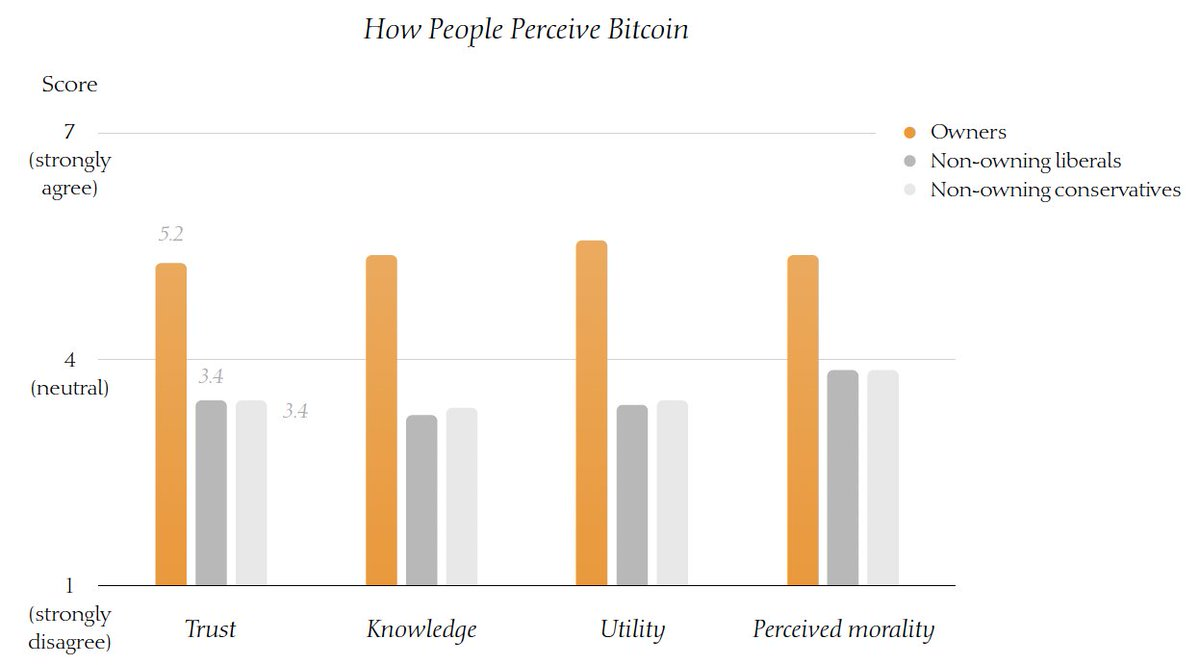
To conclude, what is most closely related to Bitcoin ownership is not who you are, but how much you know about Bitcoin and whether you think it is useful, trustworthy, and good. The 14% of Americans who own Bitcoin are not members of a specific political tribe; they are just Americans who have taken the time to research the technology and have formed a positive attitude towards it.
Snowden's Speech at Bitcoin 2024: Vote Independently, Beware of Bitcoin's Privacy Risks
- Edward Snowden gave an online speech at Bitcoin 2024, warning that politicians are trying to gain support through cryptocurrency.
Cast a vote, but don’t join a cult. They are not our tribe. They are not your personality. They have their own interests, their own values, their own things they’re chasing. Try to get what you need from them, but don’t give yourself to them, even if you have to vote for them.
- He also expressed significant concerns about Bitcoin's privacy issues. He pointed out that Bitcoin transactions are not anonymous and can be traced back to individuals; most transactions can be linked through various channels, such as regulated exchanges. This linking can track transaction history, revealing sensitive information about users' lives and affiliations.
Switzerland Pushes for Legislation Requiring Public Sector to Use Open Source Software
- Switzerland is advancing the Federal Act on the Use of Electronic Means for the Performance of Official Duties (Bundesgesetz über den Einsatz elektronischer Mittel zur Erfüllung von Behördenaufgaben, EMBAG), which requires all public institutions at the federal level to release open-source software, including the source code of software they develop or have developed for them, unless third-party rights or security issues prevent it. This "public money, public code" approach aims to enhance government operations’ transparency, security, and efficiency.
Top Reads on Blockchain and Beyond
PoW vs PoS – Economic Cost To Attack
The study analyzes the costs to rent the hashrate/staking and the cost to buy the hashrate/staking, pointing out a common misconception that PoS is inherently more expensive to attack due to the need to purchase tokens.
The study concludes that, theoretically, the economic cost of attacking is quite similar for both PoW and PoS.
Bitcoin Dollar: Advanced Eurodollar That Makes Stablecoins Obsolete
BTCPay Server founder and NBitcoin developer Nicolas Dorier argues that there are no obstacles to the creation of:
An untrusted Bitcoin-Dollar, a superior form of Eurodollar that makes stablecoins obsolete.
Untrusted brokering.
The article discusses the stability mechanisms, payment mechanism, risks & limitations, and cost model, concluding that thanks to the high settlement latency provided by the Lightning Network, a new type of asset management without custody is yet to be developed, potentially enabling anyone to become a de facto broker and offer any derivative without the need to hold funds, while significantly limiting potential loss of the consumer.
Research Paper: Blockchain Space Tokenization
Addressing the issue of blockchain congestion, this paper proposes blockchain space tokenization (BST) solution.
This capability tokenizes a blockchain’s transaction capacity and allocates it to interested users who are willing to pay in advance for the ability to regularly publish transactions over a period of time. Researchers introduce a security game to analyze the system, played between the mempool mechanism and an adversary, to address in the face of worst-case transaction-processing attacks. With this framework, researchers have proven that BST offers predictable, asymptotically optimal delays, predictable fees, and is incentive compatible.


